
Every finishing shop buys solvent—but the purchase price is only part of the total cost. Whether you’re spraying wood finishes, industrial coatings, paints, or other solvent-based products, solvent is essential for cleaning spray guns, pumps, and other equipment. Solvent recycling is one of the most effective ways to reduce these ongoing expenses, yet many businesses don’t realize how much they’re spending on disposal, labour, storage, and compliance. Understanding these hidden costs is the first step toward reducing waste, lowering operating expenses, and improving your shop’s profitability.
What Is the Hidden Cost of Solvent?
Buying fresh solvent is only the first expense.
Once solvent has been used to clean spray guns, pumps, pressure pots, or other finishing equipment, it creates a series of ongoing costs that continue long after the original purchase.
Many finishing shops simply accept these costs as part of doing business, but they add up quickly.
Think of it as the “hidden cost” of solvent.
The Four Hidden Costs Every Finishing Shop Pays
1. Disposal Costs
Used solvent must be collected, stored, and transported for proper disposal.
In many cases, those waste drums still contain solvent that could have been recovered and reused instead of being hauled away.
For a typical finishing operation, disposal costs alone can exceed $3,200 per year.
2. Labour Costs
Managing solvent takes time.
Employees fill waste drums, move containers, organize storage areas, coordinate pickups, and handle routine maintenance associated with hazardous waste.
That’s valuable labour that could be spent on production instead.
Estimated annual cost: $2,400+
3. Storage Costs
Hazardous waste drums require dedicated storage space.
Every square foot used to store waste is space that can’t be used for equipment, inventory, or production.
Over the course of a year, that lost floor space has a real cost.
Estimated annual cost: $1,200+
4. Compliance Costs
Environmental regulations require businesses to properly manage hazardous waste and maintain records for inspections and reporting.
Tracking waste shipments, maintaining documentation, and meeting regulatory requirements all consume valuable time and resources.
Estimated annual cost: $1,200+
How Much Do These Hidden Costs Add Up To?
For many finishing shops, the numbers are surprising.
Hidden Cost
Typical Annual Cost
Disposal
$3,200+
Labour
$2,400+
Storage
$1,200+
Compliance
$1,200+
Total Hidden Cost
$8,000+
These costs are in addition to purchasing fresh solvent throughout the year. That’s why focusing only on the invoice price doesn’t show the complete picture.
How Solvent Recycling Reduces Costs
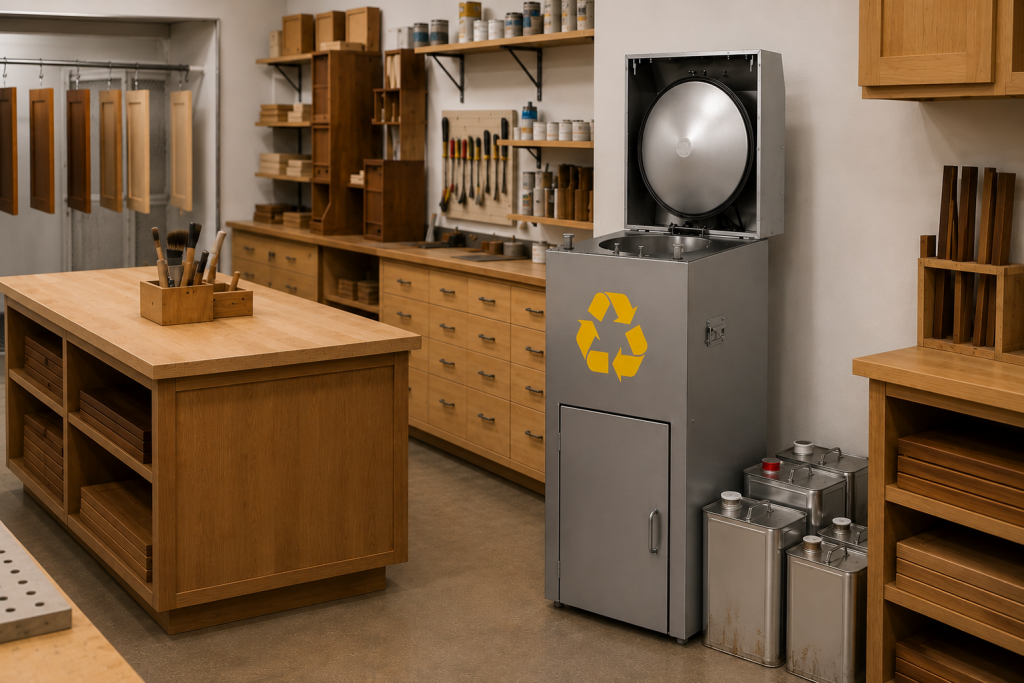
Instead of disposing of used solvent after a single use, a solvent recycler recovers and purifies it through a distillation process.
The clean solvent can then be reused for cleaning equipment again and again.
By recycling solvent on-site, businesses can dramatically reduce the amount of new solvent they need to purchase while generating far less hazardous waste.
According to Uni-ram, its solvent recyclers can reduce solvent purchases and disposal costs by up to 90%, depending on the solvent and application.
Benefits of a Solvent Recycler
A solvent recycling system helps finishing shops:
- Reduce fresh solvent purchases by up to 90%
- Generate significantly less hazardous waste
- Lower waste disposal costs
- Recover usable solvent instead of throwing it away
- Free up valuable shop space
- Reduce time spent managing waste drums
- Improve overall shop efficiency
Rather than continually paying for new solvent and disposing of old solvent, businesses get more value from every gallon they purchase.
Which Industries Benefit from Solvent Recycling?
Any business that regularly uses solvent for cleaning equipment can benefit from solvent recycling.
Common applications include:
- Cabinet manufacturing
- Furniture manufacturing
- Wood finishing shops
- Millwork and architectural woodworking
- Industrial finishing
- Metal fabrication and finishing
- Plastic manufacturing
- Composite manufacturing
- Aerospace manufacturing
- Marine manufacturing
- Automotive manufacturing
- General manufacturing facilities using solvent-based coatings
If your operation cleans spray equipment with paint thinner, acetone, gun wash solvent, or similar products, solvent recycling may offer substantial savings.
Is a Solvent Recycler Worth the Investment?
For many finishing shops, the answer depends on one question:
How much solvent do you use every month?
The more solvent your business purchases—and the more hazardous waste you generate—the greater the opportunity to reduce operating costs.
A solvent recycler doesn’t just lower solvent purchases. It also helps reduce disposal costs, labour, storage requirements, and the administrative burden of managing hazardous waste. When those savings are combined, many businesses discover the equipment pays for itself much sooner than expected.
Frequently Asked Questions
What is solvent recycling?
Solvent recycling is the process of recovering contaminated solvent through distillation so it can be reused instead of discarded. The process separates clean solvent from paint residue, oils, and other contaminants.
How much solvent can be recovered with solvent recycling?
Recovery rates vary depending on the solvent and contaminants, but many solvent recycling systems can reduce new solvent purchases by up to 90%.
Does solvent recycling reduce hazardous waste?
Yes. By recovering usable solvent on-site, businesses generate significantly less hazardous waste that needs to be transported and disposed of off-site.
What solvents can be recycled?
Many systems are designed to recycle common finishing solvents such as paint thinner, lacquer thinner, gun wash solvent, acetone, toluene, xylene, and other compatible cleaning solvents. Always verify compatibility with the equipment manufacturer before use.
Stop Paying the Hidden Cost of Solvent
The price you pay for fresh solvent is only part of the equation.
Disposal, labour, storage, and compliance all contribute to the true cost of using solvent in a finishing operation.
By recovering and reusing solvent instead of throwing it away, businesses can reduce waste, lower operating costs, and improve overall efficiency.
If your shop uses solvent every day, it may be time to look beyond the invoice and calculate what solvent is really costing your business.
Ready to reduce solvent costs? Explore the full range of Uni-ram Solvent Recyclers and discover how on-site solvent recycling can help your business recover more, waste less, and keep more money in the shop.
