
You’ve switched to a non-methylene chloride (Non-MC) contact adhesive to meet changing regulations and customer requirements. The adhesive sprays well, dries quickly, and seems easy to use—but now you’re noticing laminate edge lift or the occasional delamination
If that sounds familiar, don’t assume the adhesive is to blame.
In many cases, the issue isn’t the product—it’s the process. One small adjustment to your application technique can make a significant difference in bond strength, helping you avoid costly rework and deliver better finished products.
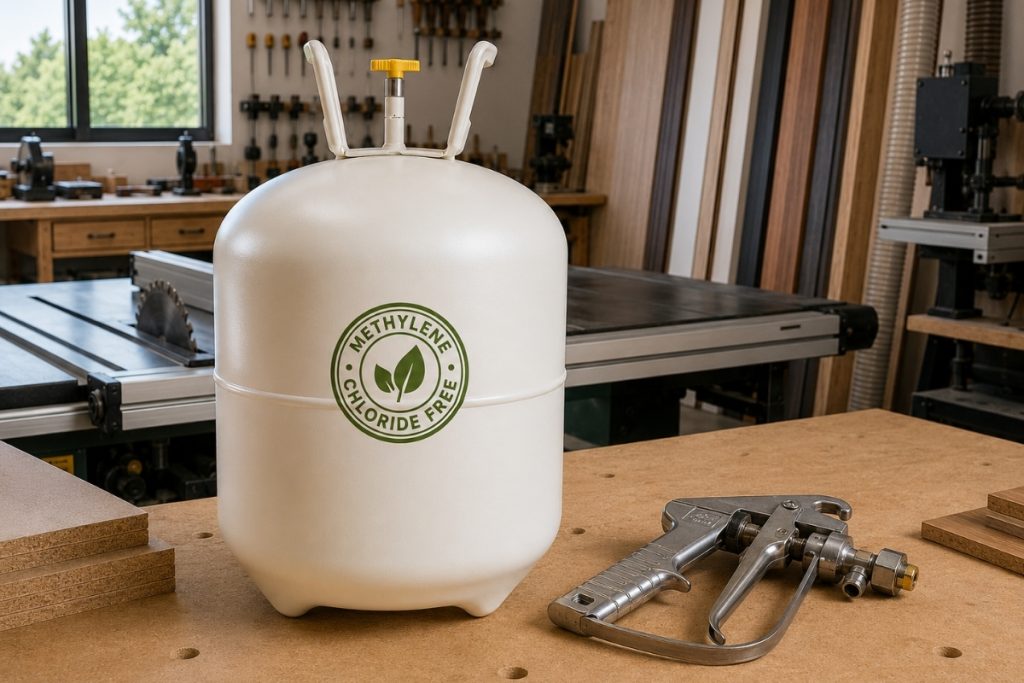
What Causes Laminate Edge Lift?
Laminate edge lift happens when the adhesive bond isn’t strong enough to keep the laminate securely attached to the substrate. Over time, the edges begin to separate, creating visible gaps that can eventually lead to complete delamination.
Common causes include:
- Bonding before the adhesive is ready
- Uneven adhesive application
- Poor surface preparation
- Temperature or humidity affecting drying time
- Using incorrect application techniques
While all of these factors can contribute, one of the most common causes when switching to non-methylene chloride contact adhesives is insufficient flash time.
Why Flash Time Matters to Prevent Laminate Edge Lift
Flash time is the period between applying the adhesive and bringing the two surfaces together.
During this time, solvents evaporate from the adhesive, allowing it to develop the tack needed for a strong, permanent bond.
Traditional contact adhesives and newer Non-MC formulations don’t always behave the same way.
Many non-methylene chloride contact adhesives require just two to three additional minutes of flash time before lamination. It doesn’t sound like much, but those extra minutes allow more solvent to evaporate, helping the adhesive achieve optimal bonding performance.
When laminates are pressed together too early, the adhesive may still contain trapped solvent, preventing it from reaching its full strength.
What Happens When You Bond Too Soon?
Skipping or shortening the recommended flash time can lead to several problems that affect both productivity and profitability.
These include:
- Laminate edge lift
- Delamination
- Rework
- Wasted material
- Customer callbacks
- Increased labor costs
The frustrating part is that these failures may not appear immediately. A project can leave the shop looking perfect, only to develop problems days or weeks later.
How to Prevent Laminate Edge Lift
Fortunately, preventing bond failures is usually straightforward.
Follow these best practices:
Give the Adhesive Enough Flash Time
Always follow the manufacturer’s recommended flash time. If you’re using a Non-MC contact adhesive, expect it to require a few extra minutes compared to traditional formulations.
Check for Proper Tack
The adhesive should feel tacky—not wet—before joining the surfaces. Rushing this step is one of the most common causes of bond failure.
Consider Your Shop Environment
Temperature, humidity, and airflow all influence drying time. Cooler or more humid conditions may require additional flash time.
Apply Adhesive Evenly
Consistent adhesive coverage helps ensure a uniform bond across the entire laminate surface. Quality spray equipment can make achieving even coverage much easier.
Recommended Products for Reliable Laminate Bonding
Choosing the right adhesive—and applying it correctly—helps produce consistent results while minimizing rework.
Helmistik 1580
Helmistik 1580 is a high-performance, methylene chloride-free contact adhesive designed specifically for demanding laminate applications.
Its high-solids formula provides:
- Fast drying
- Strong initial tack
- Excellent green strength
- Long open time
- High heat resistance
- Strong final bond
It’s an excellent choice for bonding high-pressure laminate (HPL) and decorative surfaces to MDF, particleboard, OSB, and other common substrates.
Permagrip 107-ZF
Permagrip 107-ZF is a spray-grade, high-solids contact adhesive that delivers consistent spray patterns, excellent green strength, and dependable heat resistance.
It performs well across a wide variety of materials, including:
- Laminates
- Wood products
- Metal
- Rubber
- Leather
Its versatility makes it a dependable solution for cabinet shops and woodworking professionals.
Permagrip 107-ZF comes in a portable canister system, making it convenient for both shop and jobsite applications.
Tensorgrip® P390
Tensorgrip® P390 combines a non-flammable, non-methylene chloride formulation with outstanding heat resistance and strong adhesion.
It bonds difficult substrates including:
- Unsanded melamine
- Memory foam
- Polyurethane foam
- Decorative laminates
- Various engineered materials
Its portable canister system also makes it convenient for both shop and jobsite applications.
3M™ Cylinder Adhesive Spray Gun Applicator
Consistent adhesive application is just as important as choosing the right adhesive.
The 3M™ Cylinder Adhesive Spray Gun Applicator provides:
- Adjustable spray patterns
- Even adhesive coverage
- Consistent output
- Comfortable all-metal construction
Better application helps promote consistent drying times and stronger bonds throughout every project.
Small Changes Prevent Big Problems
Switching to a non-methylene chloride adhesive doesn’t have to mean sacrificing bond quality.
In many cases, simply allowing an additional two to three minutes of flash time is enough to dramatically improve adhesion and eliminate laminate edge lift.
Before changing products or questioning your adhesive, take a closer look at your process. A small adjustment today can save hours of rework tomorrow.
Frequently Asked Questions
Why is my laminate lifting at the edges?
The most common causes include insufficient flash time, uneven adhesive coverage, poor surface preparation, or bonding the laminate before the adhesive has developed proper tack.
What is flash time for contact adhesive?
Flash time is the waiting period after applying contact adhesive but before joining the surfaces. During this time, solvents evaporate, allowing the adhesive to develop the tack needed for a strong bond.
Do non-methylene chloride contact adhesives require more flash time?
Yes. Many non-methylene chloride formulations require approximately two to three additional minutes of flash time compared to traditional contact adhesives. Always follow the manufacturer’s recommendations for the specific product you’re using.
Does temperature affect flash time?
Absolutely. Cooler temperatures and higher humidity slow solvent evaporation, meaning the adhesive may require additional flash time before bonding.
