
Are you still designing kitchens around the classic triangle?
For years, the sink, stove, and fridge formed the foundation of kitchen design. But in 2026, that approach is starting to feel outdated.
Today’s kitchens are used differently: more people, more movement, and more multitasking. That’s why designers are shifting toward layouts that reflect real-life use, not rigid rules.
In a recent video, Andreina, Interior Designer at DV Kitchens & Baths, breaks down what’s changing and what actually works now.
Watch: What’s Replacing the Kitchen Triangle
Andreina highlights a clear shift: kitchens are no longer designed around a single workflow. Instead, they’re built to support how people actually use the space day to day.
Why the Kitchen Triangle Is Losing Relevance
The kitchen triangle made sense when one person was cooking, kitchens were smaller, and appliances were limited.
That’s no longer the case.
Modern kitchens often have multiple users at once, open-concept layouts, more appliances, and several prep areas. The result? The triangle can create bottlenecks instead of efficiency.
The Rise of Work Zones in Modern Kitchen Layout Ideas
Instead of forcing movement between three points, designers are now creating dedicated zones.
- Prep zone
- Cooking zone
- Cleaning zone
- Storage zone
Each area is designed for a specific task, which makes the kitchen easier to use, especially when more than one person is involved.
Key Takeaways from the Video
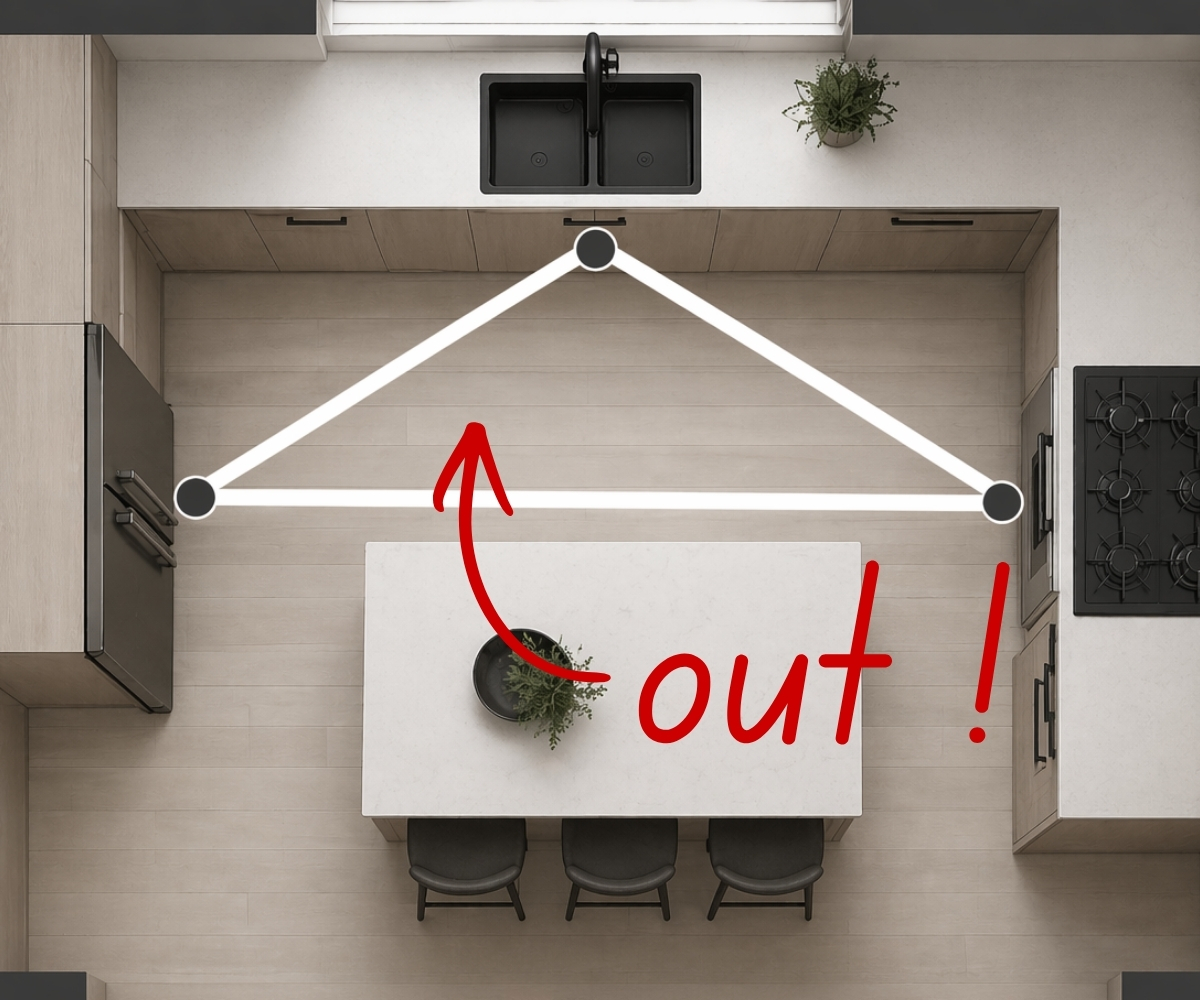
“The kitchen triangle isn’t the rule anymore.”
Rigid layouts are being replaced by flexible designs. Every kitchen is planned based on how it will actually be used.
“Kitchens are now designed as workstations.”
Think of the kitchen as a series of stations rather than a single workflow.
This is where smart storage makes a big difference. Drawer organizers keep tools where you need them, base cabinet pull-outs improve access, and pantry systems reduce clutter.
Explore kitchen storage solutions to support better work zones.
“Traffic flow matters.”
Modern kitchens aren’t used by just one person.
Placing key elements, like the fridge, so they’re accessible without interrupting the cook improves usability immediately.
“Function comes before aesthetics. Every time.”
A kitchen can look great, but if it’s frustrating to use, it won’t hold up.
That’s why designers prioritize ease of movement, accessibility, and logical placement before the final look.
How to Apply Modern Kitchen Layout Ideas in 2026
Think in Zones, Not Shapes
Start by mapping out how the kitchen will be used. Where does prep happen? Where are dishes cleaned? Where is food stored?
Design around those activities, not a fixed triangle.
Use Hardware to Support Each Zone
Good layout needs good hardware to work properly.
- Drawer slides improve access and usability.
- Hinges and lift systems make cabinets easier to use.
- Pull-outs and organizers reduce wasted space.
Improve Flow for Real-Life Use
Ask simple questions: Can two people use the kitchen at once? Can someone grab food without interrupting cooking?
If not, the layout needs adjustment.
Add Lighting Where Work Happens
Modern layouts also rely on proper lighting. Task lighting improves visibility in prep zones, while under-cabinet lighting helps make everyday work easier.
LED under cabinet lighting is a simple upgrade that improves both function and feel.
FAQ
Is the kitchen triangle outdated?
Not completely, but it’s no longer the standard. Most modern kitchens are designed around zones instead.
What is a kitchen work zone layout?
It’s a layout that divides the kitchen into areas for specific tasks like prep, cooking, cleaning, and storage.
Are work zones better than the triangle?
For most modern kitchens, yes. They support multiple users and more flexible workflows.
What matters most in kitchen design today?
Function. A layout should make everyday tasks easier before focusing on appearance.
Final Thoughts
Kitchen design in 2026 is less about following rules and more about solving real problems.
The triangle isn’t gone, but it’s no longer the starting point.
Focus on how the space will actually be used, how people will move through it, and what makes daily tasks easier. Get that right, and everything else, from storage to finishes, falls into place.
